Kardmi
- 4.7
- Rating
- 50.00K
- Installs
- Free
- Price

 Analysis by App-foxy
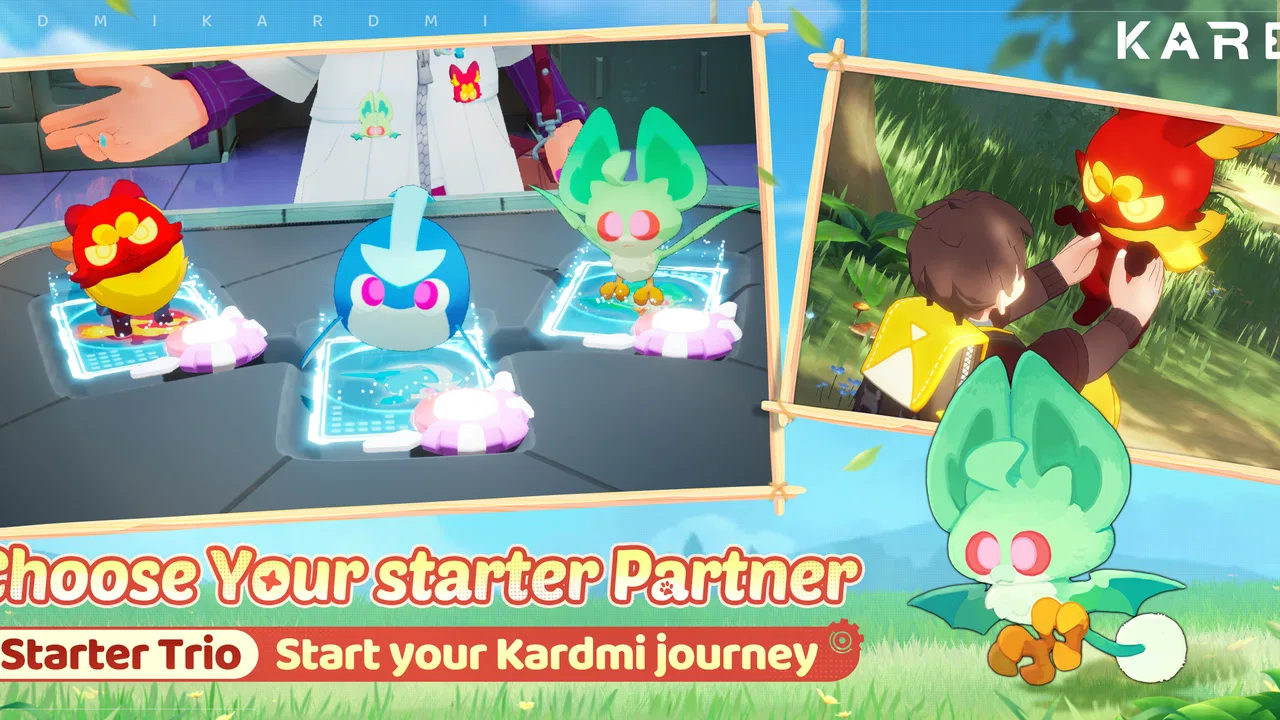
I went into Kardmi expecting a compact role-playing game built around collecting creatures, and that is exactly where its appeal begins. Developed by SevenPirates, it presents a 3D world in which monsters are gathered, developed and taken into battles. The first sessions are easy to understand: find something interesting, build a small collection and see how your choices perform when a fight starts.
That simplicity is useful on a phone. I do not need to learn a dense menu system before making progress, and the creature-collection idea gives every early session a clear purpose. At the same time, the game is not merely a quick novelty. Its real test is whether collecting and battling remain satisfying after the initial excitement of seeing new monsters wears off. My impression is positive, but with an important qualification: Kardmi works best when you enjoy gradual roster-building rather than expecting a fully developed role-playing epic immediately.
Why the first week feels inviting
The opening appeal comes from the combination of discovery and decision-making. A new creature is not only a visual collectible; it also gives me a reason to think about how my growing group should be used. That makes the first few play sessions feel more active than simply tapping through a linear sequence. I am looking at what I have, considering what deserves attention and deciding which battle opportunity is worth my time.
You May Also Like

 AccuWeather: Weather Radar
AccuWeather Review: A Quick, Clear Forecast for Everyday Decisions
For everyday plans, the best forecast is the one you can understand quickly. AccuWeather makes rain timing, radar, and local conditions easy to act on, with a few trade-offs.

 Hill Climb Racing
Why Hill Climb Racing Still Turns Crashes Into One More Run
A tiny car, a bumpy hill and one more upgrade: Hill Climb Racing keeps resurfacing because its simple chaos makes every near-miss feel personal.

 AliExpress - Shopping App
AliExpress Makes Global Shopping Feel Personal, but Shoppers Bear the Risk
AliExpress turns a global marketplace into a pocket-sized discovery engine. Its reach is useful, its shopping loop compelling, and its trade-offs easy to miss.

 Lords Mobile: Kingdom Wars
Lords Mobile Is a Kingdom-Building Routine, Not a Quick Match
A case-by-case verdict on the building, battles, device demands, and social commitments that make Lords Mobile rewarding for some players and exhausting for others.

 PDF Scanner app - TapScanner
TapScanner Makes Paperwork Easier to Capture, Check, and Share
TapScanner makes scanning with a phone feel less like a rescue operation and more like a dependable step in getting work done. Its capture tools are useful, though not flawless.

 Block Blast!
 Shows How Much a Puzzle Game Can Leave Out
A quiet grid game shows why puzzle players increasingly value instant clarity, repeatable skill and low-pressure play—and where the genre still needs to catch up.
More From Our News Desk
View All News


The 3D presentation helps the experience feel more like a small adventure than a spreadsheet of character statistics. It gives the monsters a stronger sense of presence, which matters in a collection game. When the creatures are the main reason to return, seeing them represented in a proper game space is more engaging than treating them as flat icons in a menu.
I also like the way the game leaves room for personal priorities. One player may want to chase variety, while another may prefer to invest in a smaller group and learn how to use it effectively. That difference gives the collection element some staying power during the first week. You are not only asking, “What can I unlock next?” You are also asking, “Which part of my collection do I actually want to build around?”
A realistic everyday use case is a short evening session after work or school. I can open the game with a simple goal, such as checking the current team, trying a battle or adding another creature to the collection, without needing to reserve an entire afternoon. That makes it more approachable than role-playing games that require long story chapters or lengthy preparation before anything meaningful happens.
The game is free to play, and its age rating is Everyone, so it is easy to recommend as a low-commitment experiment for families and casual players. The important distinction is that “easy to start” does not mean “equally suitable for everyone.” Players who want deep narrative writing, highly technical combat or a large amount of content from the first launch may find the early experience lighter than expected.
The public response is encouraging, with a 4.7 average from around 2.4 thousand ratings and more than 50 thousand installs. Those figures suggest that the basic formula is connecting with an audience, but they should not be treated as proof that every player will enjoy the same pace. Collection games are personal: some people enjoy repeating a familiar loop, while others begin looking for a new challenge as soon as the discovery phase slows down.
Learning the collection without rushing it
My advice for the first sessions is to resist the urge to treat every new creature as an immediate upgrade. A larger collection can be exciting, but attention is limited. I would first identify which monsters I enjoy using, then compare how they fit into the battles I am actually playing. This approach avoids a common trap in creature-collection games: spending all your energy gathering options without learning how any of them perform.
It is also worth approaching early battles as practice rather than as a final test of the roster. The useful information is not only whether I win. I want to notice which members of the team feel dependable, which ones require more planning and which choices make the fight slower than it needs to be. That habit turns the first week into preparation for longer-term play instead of a rush through the introductory appeal.
Another practical tip is to decide in advance what kind of progress feels rewarding. If the answer is discovering unusual creatures, the collection itself may provide enough motivation. If the answer is perfecting battle choices, I should spend more time experimenting with the team I already have. Kardmi can support both attitudes, but it cannot decide which one will keep me interested.
What can keep the game relevant month after month
Long-term value in a game like this depends on whether the collection and battle loop continue to produce meaningful choices. A creature-capture game can remain enjoyable for months when every addition changes how the player thinks about the roster. It becomes tiring when new additions feel interchangeable or when progress is reduced to repeating the same action without a fresh decision.
Kardmi has a reasonable foundation for recurring play because its central activities naturally invite return visits. There is always a potential tension between collecting broadly and improving selectively. I find that tension more useful than a simple checklist, because it makes me consider whether the next reward is valuable for my current approach or merely attractive because it is new.
The best long-term routine is likely to be a measured one. I would play often enough to keep track of the collection, but not force daily sessions when I have no clear objective. This is a game that benefits from leaving a little room between sessions. Returning with a specific plan—testing a different group, revisiting a battle or deciding where to focus resources—feels healthier than opening it automatically and repeating actions out of habit.
That distinction matters because free mobile role-playing games often compete with several other games on the same phone. Kardmi does not need to replace every other pastime to earn a place in a player’s routine. It only needs to make returning feel worthwhile. In my experience, it has a better chance of doing that for people who enjoy gradual collection management than for players who need constant dramatic changes.
The version I reviewed is 0.3.38, which gives the game the feel of a project that is still being shaped rather than a completely settled, decades-old genre standard. I see that as both an opportunity and a reason to keep expectations realistic. A developing game can become more rewarding as its foundation grows, but a player choosing it today should judge the current loop on its own merits rather than on what it might become later.
How it compares with familiar alternatives
Compared with a story-heavy role-playing game, Kardmi puts less pressure on narrative momentum and more on the pleasure of building a group. If I want character dialogue, elaborate quests and a long dramatic campaign, another role-playing title will probably suit me better. Here, the collection is the main reason to care, and battles give that collection a practical purpose.
Compared with a purely casual creature game, it asks me to think more about how the monsters work together. That extra layer is welcome, but it also means the game is not ideal for someone who only wants a relaxing collecting album. The more seriously I take battles, the more attention I need to give to my choices and progress.
It also differs from large, established monster franchises in scale and familiarity. Those alternatives may offer broader worlds, more recognizable creatures or a longer history of refinement. Kardmi’s advantage is that it feels easier to approach without carrying the weight of a huge existing universe. Its disadvantage is that players accustomed to very deep systems may notice the difference quickly.
For me, the strongest comparison is not about which game has the most content. It is about which loop I want on a particular day. When I want to explore a collection and make small improvements, Kardmi is a comfortable choice. When I want a rich story, competitive complexity or a vast world with many layers of activity, I would choose a different game instead.
The maintenance burden behind the easy start
Every collection game creates a maintenance task, even when that task is enjoyable. I need to remember which creatures matter to my current plan, avoid spreading attention too thinly and decide when a new addition deserves testing. Kardmi’s manageable structure makes this less intimidating than in some larger role-playing games, but it does not remove the responsibility entirely.
The most useful maintenance habit is to keep a focused core group. I would rather understand a few dependable choices than constantly replace them because a new creature looks appealing. This does not mean ignoring the rest of the collection. It means separating experimentation from the group I rely on when I want consistent results.
A second helpful habit is to review progress before spending anything. The game includes in-app purchases ranging from $0.99 to $99.99 per item, so the free entry point does not mean every possible shortcut or optional purchase has the same impact on a budget. I would decide what the game is worth to me after experiencing the basic loop, not during the excitement of a new discovery.
This is especially important for younger players, even though the content rating is Everyone. The age rating describes suitability of content, not whether a player should make unsupervised purchase decisions. If the game is used on a shared device, I would set clear expectations about purchases before handing it over. That simple conversation prevents the free download from becoming a source of surprise spending.
The maintenance burden also includes storage in my attention. A game can be inexpensive in money and still expensive in time if it encourages me to check it repeatedly without a satisfying reason. I get more value from Kardmi when I open it with a purpose. If I notice that I am only checking menus or collecting items automatically, that is a sign to reduce the frequency of play rather than forcing the habit.
Three ways to get more from the same collection
First, I would use a “testing group” separate from my dependable group. This creates a safe place to learn what a newly collected creature can do without weakening every attempt to make progress. It also turns new discoveries into experiments rather than instant replacements.
Second, I would judge additions by the decisions they create, not by their novelty alone. A creature is more valuable when it changes how I approach a battle or gives me a reason to reconsider the team. This is a better long-term filter than simply counting how many creatures I have collected.
Third, I would schedule occasional pauses instead of treating uninterrupted play as the goal. Returning after a short break can reveal whether I genuinely miss the collection loop. If I do, the game has earned a place in my routine. If I do not, I have learned that the first-week excitement was enough, and I can move on without turning the experience into a chore.
Where fatigue is most likely to appear
The largest risk is repetition. Capture, collection and battle games depend on a familiar cycle, and familiarity can become comfort or boredom depending on the player. If the satisfaction comes mainly from the first discovery of a creature, the reward may weaken once the collection feels familiar. Players who need frequent surprises should pay attention to how quickly their own interest changes.
Another possible source of fatigue is roster indecision. Having choices is enjoyable until every session becomes a small administrative task. If I spend more time reorganizing than battling, the collection has started working against the game’s central appeal. Keeping a focused group and a limited testing group helps, but players who dislike management may still find the structure demanding.
There is also a tension between free access and optional spending. The ability to start without paying is valuable, especially for anyone unsure whether the game will become a habit. However, the presence of purchases up to $99.99 per item means I would not recommend approaching the game casually if spending limits are difficult to maintain. The safest approach is to decide on a personal budget before the game becomes emotionally important.
The developing nature of the current version may also affect patience. Some players enjoy watching a game grow and are comfortable with a narrower experience while it is being refined. Others want a fully mature product with a broad range of polished activities right away. Kardmi is better suited to the first group. If I am looking for a finished replacement for a long-established role-playing favorite, I would choose the established favorite instead.
Device compatibility is relatively approachable because the minimum operating system is Android 7.0, but that alone does not determine how comfortable the game will feel on every phone. A 3D game can be more demanding in practice than a simple menu-based title. I would try it on the intended device before committing to a long-term routine, particularly if the phone is older or shared with other users.
My long-term verdict on Kardmi
After looking beyond the first impression, I think Kardmi earns a place on the phone of a specific kind of player: someone who likes collecting monsters, making gradual team decisions and returning for short, purposeful sessions. Its 3D presentation gives the collection more personality, while the role-playing structure provides a reason to use what has been gathered rather than leaving everything as decoration.
I would not recommend it as the first choice for someone seeking a deep story, a massive established world or highly demanding competitive play. I would also be cautious with anyone who tends to spend impulsively in free games. The purchases are optional to the entry point, but the broad price range makes personal limits important. For younger players, the Everyone rating is reassuring for content, while adult supervision around spending is still sensible.
The game’s lasting value comes from how deliberately it is played. If I focus on a core group, test new creatures with a clear purpose and take breaks when the loop feels automatic, the collection remains more interesting. If I chase every addition without learning the roster, the experience becomes maintenance-heavy and the novelty fades faster.
SevenPirates has a promising base here, and the current 0.3.38 release is most appealing to players willing to enjoy the game as it stands while accepting that it feels like a growing project. I see enough personality and practical replay value to keep it installed, but I would treat it as a focused side game rather than my only role-playing experience.
My final recommendation is simple: try it if the idea of building a personal monster collection sounds more appealing than following a long scripted adventure. Give the first sessions enough attention to learn what kinds of creatures and battles actually hold your interest, then judge the game by whether you still want to return after the discovery rush settles. Its real strength is not endless novelty, but the quiet satisfaction of improving a collection that feels like your own.
FAQs for Kardmi
01What is Kardmi and what does it offer?
Kardmi is a versatile app designed to streamline your personal and professional life by organizing tasks, contacts, and appointments in one place. It offers features like calendar integration, task reminders, and contact management, making it ideal for users looking to enhance productivity and stay organized efficiently.
02Is Kardmi compatible with both Android and iOS devices?
Yes, Kardmi is available for both Android and iOS platforms, ensuring a seamless experience across devices. Users can download the app from the Google Play Store or Apple App Store, allowing access to its features whether on a smartphone or tablet, maintaining cross-platform functionality.
03How does Kardmi ensure the security of my data?
Kardmi prioritizes user privacy and data security by implementing robust encryption protocols and safe data storage practices. Users can feel confident that their information is protected, as the app complies with industry-standard security measures to safeguard personal and professional data effectively.
04Does Kardmi offer a free version or require a subscription?
Kardmi provides a free version with essential features to get started. For enhanced functionality, such as advanced task management and premium support, users can opt for a subscription. This tiered approach allows users to choose a plan that best suits their needs and budget.
05Can I sync Kardmi with other apps and services?
Yes, Kardmi offers integration capabilities with popular apps and services like Google Calendar, Outlook, and other productivity tools. This feature ensures that users can synchronize their tasks and appointments across different platforms, enhancing convenience and productivity.
Pros
- User-friendly interface with intuitive design.
- Wide range of card customization options.
- Seamless integration with social media.
- Responsive customer support available.
- Frequent updates with new features.
Cons
- Limited free template options available.
- Requires internet connection to function.
- Occasional ads in the free version.
- Some features locked behind paywall.
- Initial setup can be a bit complex.

Kardmi
Gallery